
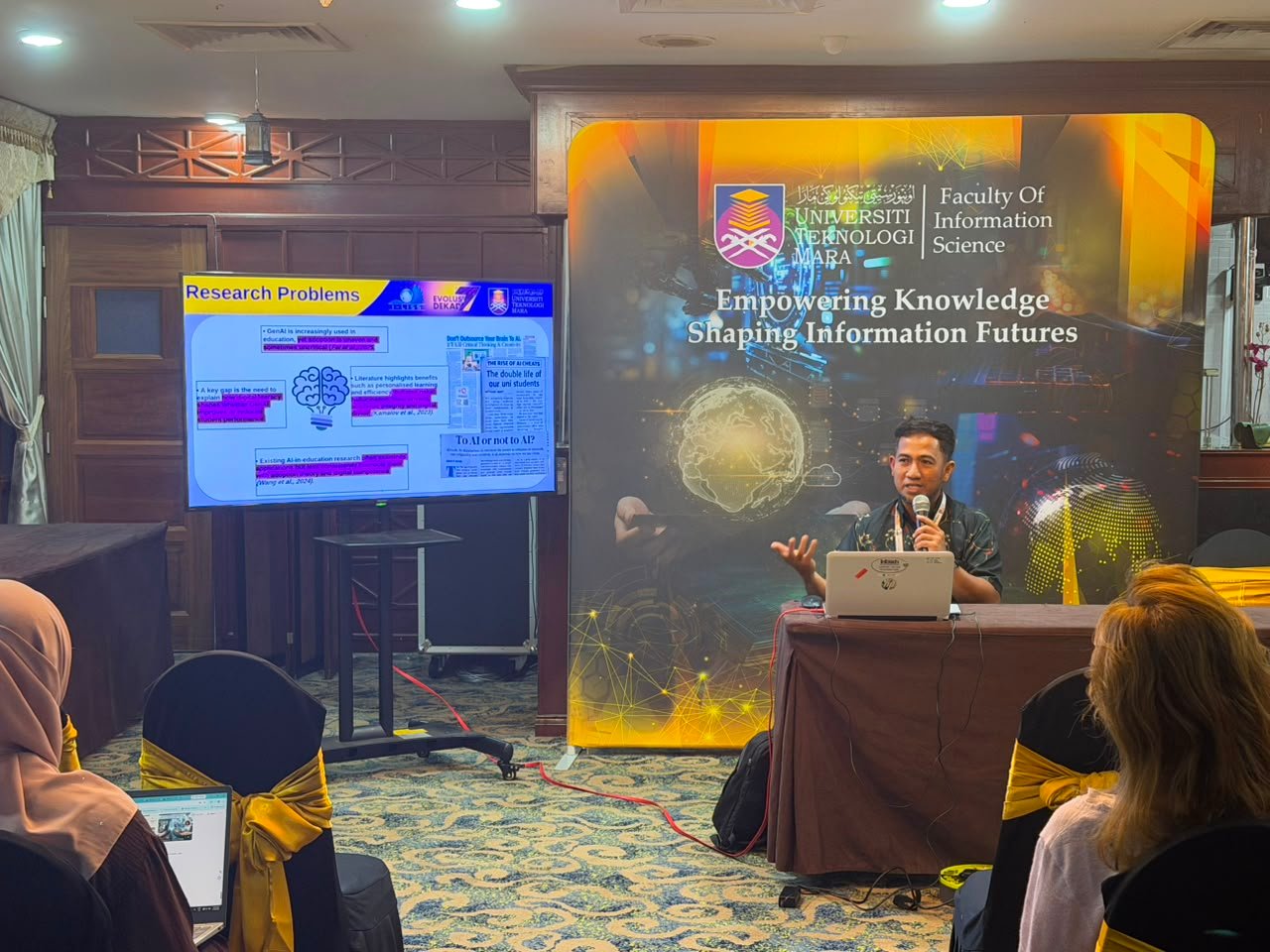
I am thrilled to share some exciting news! I recently had the honor of presenting our team's conceptual review at the 10th International Library and Information Science Society Conference (I-LISS 2026) and to make the occasion even more special, I was awarded Best Presenter!
Our paper, co-authored alongside Prof. Mohamad Noorman Masrek, Abdurrahman Jalil, and Muhammad Asyraf Wahi Anuar from Universiti Teknologi MARA (UiTM), addresses one of the most critical challenges of our hyper-connected world: information disorder
The Real Problem Behind Modern "Fake News"
We have all witnessed how quickly false claims, manipulated deepfakes, and sensational headlines circulate across social feeds and messaging apps
Misinformation: False content shared without harmful intent (like a misinformed health remedy shared by a well-meaning relative)
. Disinformation: Fabricated content created intentionally to deceive or manipulate
. Malinformation: Real, accurate information weaponized out of context to inflict harm
.
Most current solutions—such as basic fact-checking tags or traditional media literacy classes, treat these issues in isolation
Introducing the DQ–IDR Framework
To fill this gap, our research introduces the DQ–IDR (Digital Intelligence–Information Disorder Resilience) Framework
Identity & Security: Spotting synthetic AI bot accounts and recognizing scam-vector links
. Use & Safety: Managing screen habits to prevent mindless scrolling and identifying manipulation tactics early
. Emotional Intelligence: Recognizing when outrage or fear is manipulating your judgment so you can pause before sharing
. Literacy & Communication: Practicing lateral reading across sources and learning how to constructively correct false claims within your own networks
. Digital Rights: Advocating for platform transparency and citizens' right to accurate public information
.
Instead of viewing users as passive targets, the DQ–IDR framework empowers everyday citizens to become active correctors who protect the digital health of their communities
Join the Conversation!
Building digital resilience isn't just an academic mission. It requires all of us working together.
Have you ever caught yourself almost clicking "share" on a story before realizing it was outrage-bait?
How do you typically handle it when a friend or family member shares unverified news in a group chat?
If you are interested in diving deeper into the full research paper, feel free to drop a message or reach out directly!